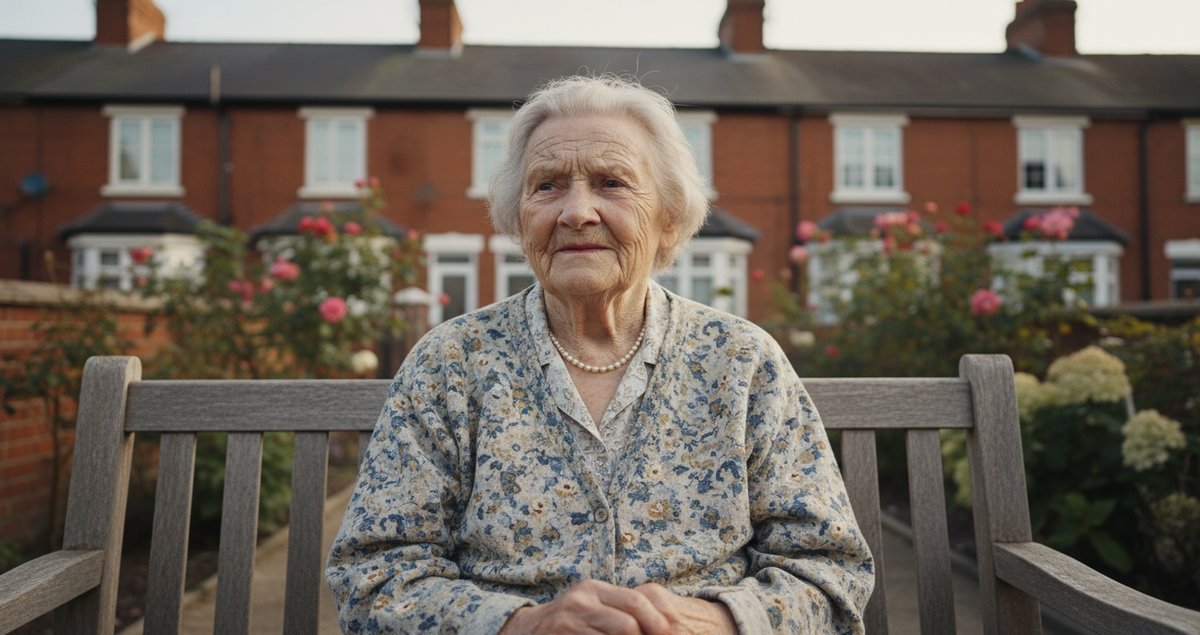
There is something quietly stubborn about a generation taught to queue, to make do, and to wait a turn. That generation learned emotional regulation not from glossy parenting manuals but from everyday constraint and odd kinds of freedom. This piece is not a nostalgic postcard. It is an attempt to examine how ordinary childhoods in the 1960s and 1970s produced psychological habits that remain useful now. I mean useful in real human terms when phones buzz, attention thins, and anxiety is sold back to us as normality.
How the landscape shaped children
Streets then were less curated and supervision was measured. Children spent hours unscheduled. They navigated conflict without adult arbitration. They experienced friction and reparations. They scraped knees and mended friendships. There are obvious costs to that era too long catalogued elsewhere. But what is underreported is the subtle architecture of regulation that those conditions built: toleration of discomfort, iterative negotiation, and a capacity to rehearse recovery without constant adult scaffolding.
The neglected offering: low intensity stress
These were not traumas in the clinical sense. They were micro-stresses that required local problem solving. Losing a game taught a child to name the feeling and then store it away until the next play. Waiting for a bus meant time to sit with irritation and decide whether to speak or swallow it. Those moments trained attention to not immediately explode into action. Over time, repetition built a repertoire: breathe, label, choose response.
Attachment without overactivation
People sometimes assume the 60s and 70s were emotionally cold. Not so. Care and continuity looked different back then. There was room for consistent caregivers and autonomy at once. That combination often produces a secure base without overactive coddling. The result was children who could both seek comfort and step away to cope independently.
“I define an affectional bond as a relatively long enduring tie in which the partner is important as a unique individual and is interchangeable with none other. In attachments there is a need to maintain proximity, distress upon inexplicable separation, and pleasure upon reunion.”
Mary Ainsworth described attachment in ways that help explain how regulation emerges from relationship. A child who trusts a caregiver enough to explore learns to come back, feel recalibrated, then move out again. It is not dramatic. It is cumulative.
The classroom as a rehearsal space
Schoolrooms taught a different kind of regulation. Classrooms then demanded attention not as wrestling with screens but as skill. Teachers did not always have behavioural frameworks but their expectations forced children to practise delay and manage impulses. Those rituals taught tolerance for boredom and incremental frustration. For many, it worked as repeated exposure. For some, it failed. All social histories are uneven. Still, the idea that repeated toleration builds capacity is empirically and experientially sensible.
Why those habits still matter now
Modern life rewards immediacy and punishes patience. The mental health field is full of clever interventions but few can easily replicate a lifetime of small exposures to frustration and resolution. Emotional regulation that was honed by ordinary childhoods in the 60s and 70s is resilient because it is ecological. It is not a technique plucked from a lab. It is a set of practiced responses embedded in social routines.
“Resilience initially was talked about as if it were a trait and it is become clear that is quite the wrong way of looking at it. It is a process it is not a thing.”
Rutter s point matters. The forms of regulation I am describing are not fixed packages you either have or lack. They are processes shaped by repeated context. That is hopeful and demanding. Hopeful because these skills can be cultivated. Demanding because cultivation requires repeated scaffolds not slick quick fixes.
What is often missing from modern attempts to copy the past
Contemporary parenting manuals try to replicate outcomes without acknowledging the messy social ecology that built them. We seek to simulate resilience with structured activities and timed interventions. That reduces a complex developmental arc to a set of exercises. There is value in therapy and targeted work. But the risk is fetishising activities while ignoring everyday social affordances such as unscheduled play, authentic peer conflict, and unintrusive caregiver presence.
I am not advocating a return to any romanticised past. There were blind spots and injustices. Yet there’s a pragmatic lesson: repeated mild challenge plus reliable repair is fertile ground for emotional regulation. That structure happened accidentally then. We could make it happen intentionally now.
Practices we can borrow without replicating every old social harm
Allowing children to experience small predictable failures creates opportunities to rehearse regulation. Encouraging language for feelings makes those experiences less bewildering. Establishing predictable routines provides a regulatory scaffold. None of these require replicating outdated social norms. They require a commitment to messy repetition.
On patience misplaced and patience earned
There is a difference between enforced patience and practiced patience. Enforced patience is passive. Practiced patience is active. It is not passive waiting for better things to happen. It is learning to sit with an emotion and do something informed rather than reactive. That distinction explains why some people who grew up in harsher conditions did not become better regulated. Hardship alone does not train regulation. Predictable repair and opportunities to rehearse response do.
Closing thoughts that are not neat
The childhoods of the 60s and 70s are not a manual. They were a messy mixture of constraints and freedoms that together created an ecology where regulation could be practiced. If you were lucky you got enough of the right repetitions. If not, the lesson is procedural: cultivate micro exposures to frustration then pair them with consistent repair. It is slow. It is unglamorous. It works in human ways. And maybe that wink of stubborn usefulness from another era is worth paying attention to.
| Core idea | How it showed up in 60s and 70s childhood | What it produces |
|---|---|---|
| Repeated mild stressors | Unsupervised play street games losing and retrying | Tolerance for discomfort and adaptive coping |
| Secure but autonomous attachment | Consistent caregivers with room for independent exploration | Ability to seek support and self-soothe |
| Routine social rehearsal | Classroom rules team games social negotiation | Impulse control and social repair strategies |
| Process oriented resilience | Accumulated small recoveries rather than heroic overcoming | Durable emotional regulation that is context sensitive |
FAQ
Did children in the 60s and 70s have better mental health?
No simple answer exists. Rates of diagnosed conditions and the social framing of mental health have both changed. The claim here is narrower. Certain everyday developmental practices back then produced repeated opportunities to practise regulation. That does not mean universal better outcomes. It means a set of ecological conditions existed which in many cases fostered regulatory habits.
Can modern parents recreate those benefits without repeating the harms?
Yes. Intentional design of environments that allow small failures predictable repair and autonomy provides similar rehearsal. That looks like unscheduled play within safe bounds conversations that label feelings and consistent responses from caregivers. It requires patience a tolerance for mess and the willingness to let competence develop rather than being engineered instantaneously.
Are these ideas supported by research?
Contemporary developmental science emphasises process based resilience and the role of attachment and small stress exposures in learning regulation. Work by established scholars has reframed resilience as dynamic and context dependent rather than a fixed trait. That scholarship helps translate everyday observations into testable ideas.
Is this advice for everyone?
This is not universal counsel. Individual histories and systemic factors matter deeply. What I offer is a synthesis of observed patterns and practical inferences about what aids emotional regulation. People need different supports at different times. The central point is that micro practice embedded in real life often outperforms isolated techniques.
What is the simplest thing to start with today?
Start with language. Name the emotion. Offer a short predictable repair or routine afterwards. Repeat this many times. Over time that repetition will add up into a small regulatory grammar that an individual can use outside the moment of instruction.